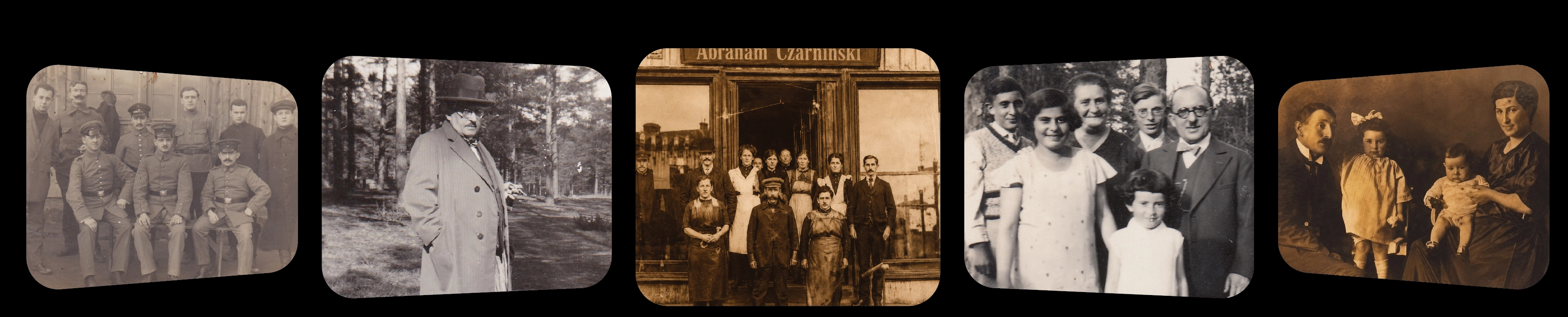
The earliest records of the Czarninski family date back to the early nineteenth century in the small German town of Prostken, in the former German region of East Prussia, near the border with Poland. Prostken was a small border town situated along the railway line connecting Poland and Germany, serving as a crossing point and center of commercial exchange between the two countries.
Abraham Czarninski was a strong, bearded man with the appearance of a Russian peasant. He was a respected member of the community. It is said that local antisemites feared him because of stories about the beatings he had given some of them. He had several children, among them Jacob Czarninski, who was born on September 6, 1885. During World War I, like many loyal Germans of his generation, Jacob enlisted in the German Army to fight for his country. When the war ended in 1918, the town of Prostken had suffered extensive destruction, including its synagogue.
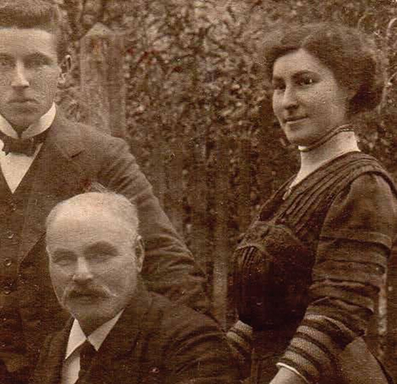
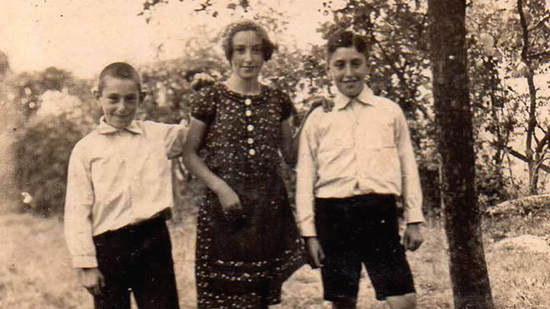
For many years, the top floor of the Czarninski family home served as a synagogue and gathering place for the town’s remaining Jewish community. After World War I, Abraham Czarninski’s children left Prostken, with the exception of Jacob, who remained to manage the family business. Jacob Czarninski married Johana Seidemann, and together they had four children: Leo, the eldest; Alfredo, the second; Edith, the third; and Elfe, the youngest.
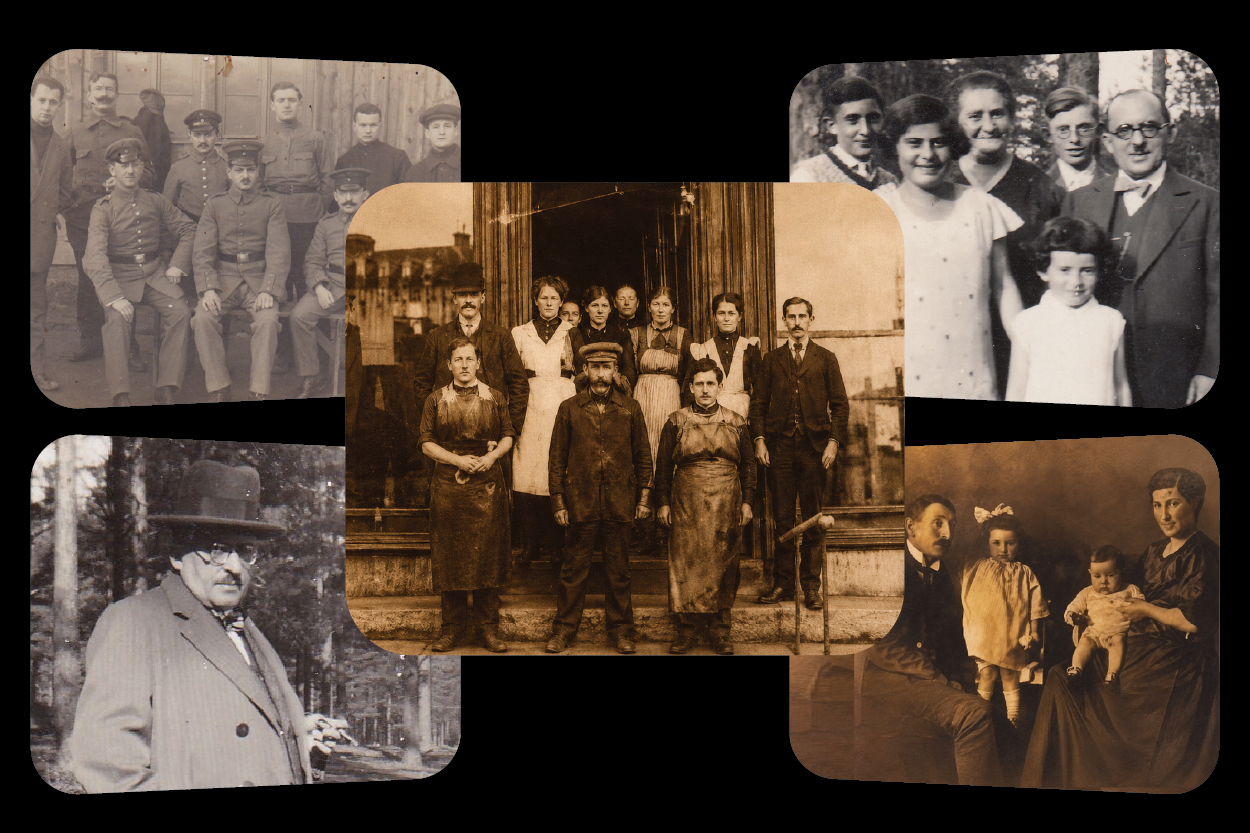
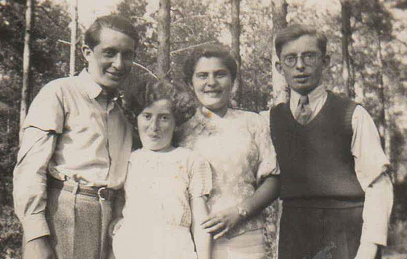
Alfredo, Edith, Elfe, and Leo Czarninski
The Baiers
Records of the Baier family date back to the late nineteenth century in Papenburg, a city in northeastern Germany, near the Dutch border. The Baiers were a prosperous and highly respected family. Hayman Levi Baier married Hendel Hes in 1793. Their son, Levi Baier, married Rebecka Nordheimer, and they had eight children, six of whom were sons, including Emil Baier. Emil Baier was born on March 1, 1876, and, like many patriotic Germans of his generation, served in the German Army during World War I. He attained the rank of officer and received military honors. He married Guida Oppenheimer, and together they had three children: Ruth, the eldest; Ludwig, the second; and Fritz, the youngest. Emil Baier worked in the cattle trading business and owned land in the region, which he used for another of his enterprises: cattle fattening. “Kristallnacht”, the Night of Broken Glass, which took place during the night of November 9–10, 1938, was a coordinated attack against Jewish citizens and their property. The Nazis burned the Baier family home, along with the homes of most Jewish families and every synagogue in the country. It was a devastating blow to the Baier family, who were forced to rely on friends for shelter.
A few weeks after that terrifying night, Emil Baier was arrested by the town commissioner. The accusation was entirely false and fabricated: “for performing shechita (slaughtering cattle according to the laws of Kashrut),” a practice strictly prohibited by the Nazis. He was taken to jail and held in solitary confinement.
Hayman Levi Baier
Desperate, Mrs. Baier spent the night protesting and trying to see her husband. After forty-eight hours in detention, he was released. In her anguish, she did not realize that the Nazis had rounded up all the Jewish men in the town and deported them to labor and extermination camps.
The commissioner, who had been informed of the order, had imprisoned Emil Baier in order to protect him from the Nazis and prevent his deportation. A few days after Emil Baier’s release, a nun came to speak with the family and told them: "You are all going to die at the hands of the Nazis. Give me young Ruth, and I will take her to England. At least she will be saved." With no other option, the Baier family entrusted their fifteen-year-old daughter Ruth to the nun.
The Baier family lost all hope of being saved; it was already too late for Jews to leave Germany. Everyone had given up hope except Mrs. Guida Baier, who managed to gather every last penny and traveled to Bremen. There, she went from consulate to consulate until she arrived at the Ecuadorian Consulate. Consul José Ignacio Burbano had coincidentally received authorization to issue 40 visas to Jews with expertise in agriculture and agricultural affairs. He granted four visas to the family.