
The Czarninski Baier
The Czarninski Baier
Content
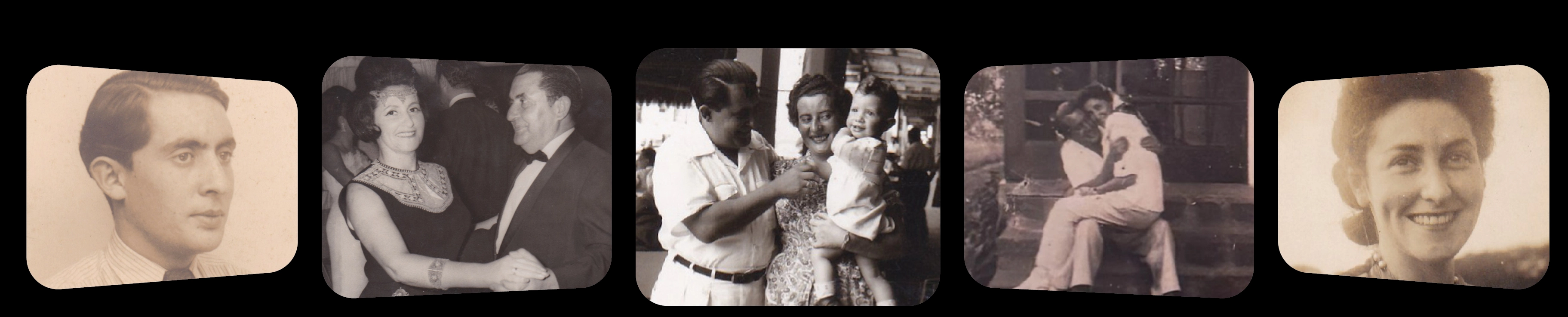
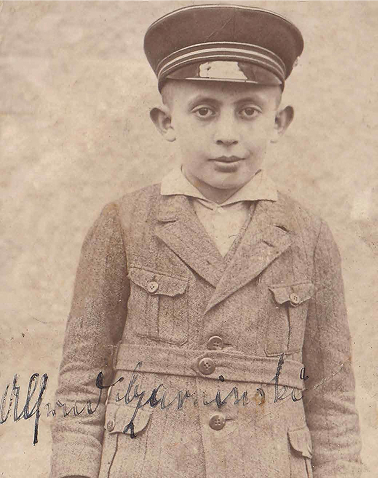
Alfredo Czarninski
Alfredo was born in Prostken, Germany, on August 31, 1917. Unlike his siblings, Alfredo was a lively and restless boy from an early age, always getting into mischief. As a very young child, he fell down a flight of stairs and struck his forehead, leaving him with a scar that he would carry for the rest of his life. Because the population of East Prussia had a long history and tradition of antisemitism, the rise of Hitler to power in 1932 quickly brought increased persecution of Jews. The first to suffer under these new circumstances were the children and young people, who were immediately harassed by classmates and teachers alike. Finally, in 1933, young Alfredo was expelled from school simply for being Jewish.
At the age of 16, unable to complete his secondary education, he moved to Berlin to work as an apprentice with uncles who owned businesses manufacturing and selling handbags. He worked there for a year, but Alfredo, restless and proud, decided that he had to leave Germany. He traveled alone to Frankfurt and joined a group of young Jews affiliated with Jabotinsky, who were preparing to immigrate to Palestine by learning and practicing agriculture. At that time, Palestine was under British Mandate rule, and entry required British papers and permits. Months passed, but the documents never arrived. Finally, Alfredo decided that he could no longer remain in Nazi Germany and chose instead to travel to South America.
Alfredo Czarninski
Alfredo purchased a ticket to travel by ship and set sail for Costa Rica. For economic reasons, he traveled in third class under rather difficult conditions, but, as always, he remained optimistic and happy to have left Germany behind. During the voyage, he met other young Jewish immigrants. Upon arriving in Costa Rica, it was not long before a government official attempted to extort them, demanding fifty dollars from each of them in exchange for permission to remain in the country. But young Alfredo—proud, idealistic, and guided by strong principles—refused to submit to extortion. Instead, he made his way to the port and managed to secure passage aboard a ship bound for Ecuador. After several days at sea aboard the British cargo vessel “Reina del Pacífico”, he arrived on November 25, 1936, at the port of La Libertad. From there, he traveled to Salinas.
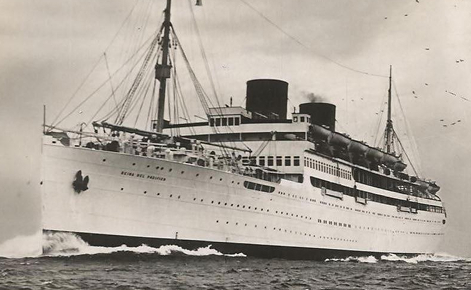
RMMV Reina del Pacífico ocean liner, on which Alfredo Czarninski emigrated in 1936
At the port captaincy, he was given instructions on how to reach Guayaquil, and after a long journey by railcar, he finally arrived in the city that would become one of the great loves of his life: Guayaquil.The young immigrant, a 19-year-old “gringo,” arrived with little money and no knowledge of the language. He found a very inexpensive hotel, only to discover the following morning that he had spent the night in a brothel. By chance, he met Mr. Juan Calero, owner of the largest shoe stores in the city, who offered him a job at his shoe factory in Ambato. Alfredo traveled there and began working as a factory laborer. He lived in the most modest conditions in order to save every possible cent. After several months, he decided to return to Guayaquil, where he obtained a loan from a fellow countryman and purchased the premises of the Salón Rosado on September 4, 1937. Although he knew nothing about cooking, he felt confident and optimistic because he had hired a first-rate chef. To his surprise, however, the day before the restaurant’s opening, the chef informed him that he was leaving after securing another job. In desperation, Alfredo contacted Mrs. Kohn, another immigrant, who came to his aid by lending him a cookbook.
On the night before the opening, Don Alfredo, cookbook in hand, prepared his very first dish: chicken and rice. He shared it with his employees, never imagining that it would one day become the Salón Rosado’s most popular and celebrated specialty. As soon as he was able to establish himself, Alfredo arranged the necessary documents for his parents and siblings to immigrate to Ecuador. In doing so, he enabled them to escape Nazi persecution and ultimately saved their lives. Meanwhile, Alfredo’s father, Don Jacobo Czaminski, together with other Jewish immigrants, helped establish the first Jewish Community of Guayaquil in order to preserve the continuity of Jewish life in their new homeland. Their first initiative was to raise sufficient funds among the Jewish immigrant community to purchase a parcel of land from the Junta de Beneficencia, thereby establishing the city’s first Jewish cemetery.
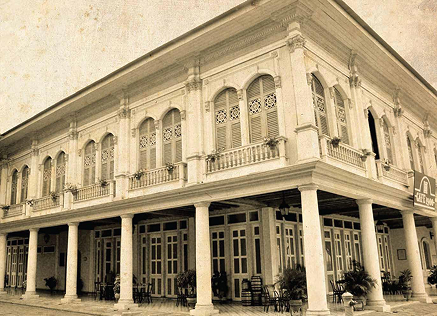
The First Jewish Community of Guayaquil
Ruth Baier
Ruth was born in Papenburg, Germany, on March 13, 1923. At the age of sixteen, she was taken by a nun to a convent in England belonging to the Order of Notre Dame de Sion, a convent that also operated a school attended by members of England’s highest Catholic society. Among Ruth’s classmates was the daughter of General Charles de Gaulle, who at that time was living in exile in England.
As we have mentioned, it was a school attended by members of the highest social circles, so life was not easy for her without her parents and without money. We do not know under what circumstances she met the young woman who would become the current Queen of England, Queen Elizabeth. After completing her studies at the school, she dedicated herself to training as a nurse and spent the war years and the period of the great bombings of London working in one of the city's hospitals.
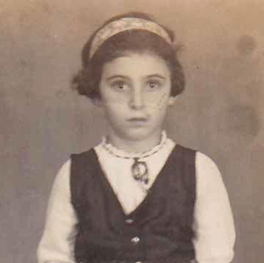
Ruth Baier
During this period, Ruth received a special exemption from the restrictions imposed on foreigners classified as enemy aliens during the early months of the Second World War. This document, issued in Nottingham, England, on October 31, 1939, recognized her as a refugee from Nazi oppression and allowed her to remain at liberty, exempting her from internment under the Aliens Order of 1920.
At the same time, Ruth’s family arrived in Ecuador in 1939. Her father, Mr. Emil Baier, began working on a hacienda located across from Nobol, where he settled with Ruth’s mother and her brothers, Ludwig and Fritz.
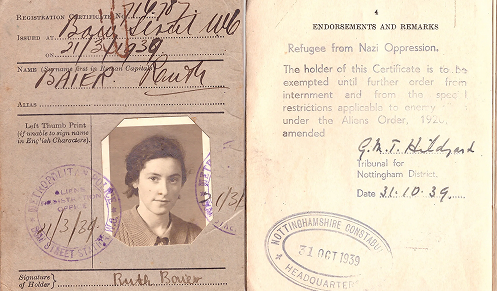
Ruth Baier's Certificate of Registration in England
The constant pressure and the hardships of life in the countryside eventually affected Mr. Emil’s health. He suffered a minor stroke that left him with a slight impairment in his ability to walk and some difficulty speaking. As a result, the family decided to move to Guayaquil, where they rented a small apartment on the corner of Boyacá and Luque.
Ruth’s mother devoted herself to supporting the family by making small German-style empanadas de viento coated in sugar. Each morning, she would place them on a tray and give them to Ludwig and Fritz to sell on the streets. The two young men, 18-year-old Ludwig Baier and 16-year-old Fritz Baier, were sent by their mother to El Rosado to buy butter, coincidentally during a period when it was in short supply. As he did with all his customers, Don Alfredo explained that he could not sell them any, since it was an essential ingredient for preparing the cakes served at the salon. From that moment on, the young brothers developed a resentment toward the “ogre” Don Alfredo.
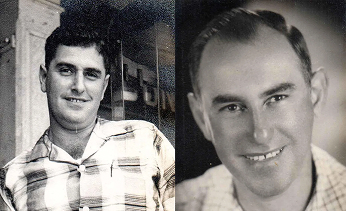
Ludwig and Fritz Baier
With the war over in August 1946, after eight years in England, the young Ruth, who was already engaged to be married, traveled to Guayaquil, Ecuador, to visit and reunite with her parents and brothers. Together with her family, she regularly attended the Jewish Community of Guayaquil, located at the corner of 9 de Octubre and Malecón. The young single men of the community were captivated by Ruth, a beautiful young woman with refined manners. Her brothers told her that she was free to go for walks or to the cinema with any of the young men in the community, with one exception: Alfredo Czarninski, “the ogre” who had once refused to sell them butter for the preparation of their empanadas.
Marriage
Nothing could stop young Alfredo. He telephoned Ruth and invited her to go out with him, but she replied that she could not because she already had a date with another young man. Upon hearing that she had plans with someone else, Alfredo raised his voice and exclaimed, “I can’t hear a thing—don’t move, I’m on my way.” He ran to the Baier family home. He invited Ruth for a walk in Seminario Park, and after two hours of strolling through the park, he managed to convince her to cancel her date with the other young man and go out with him instead.
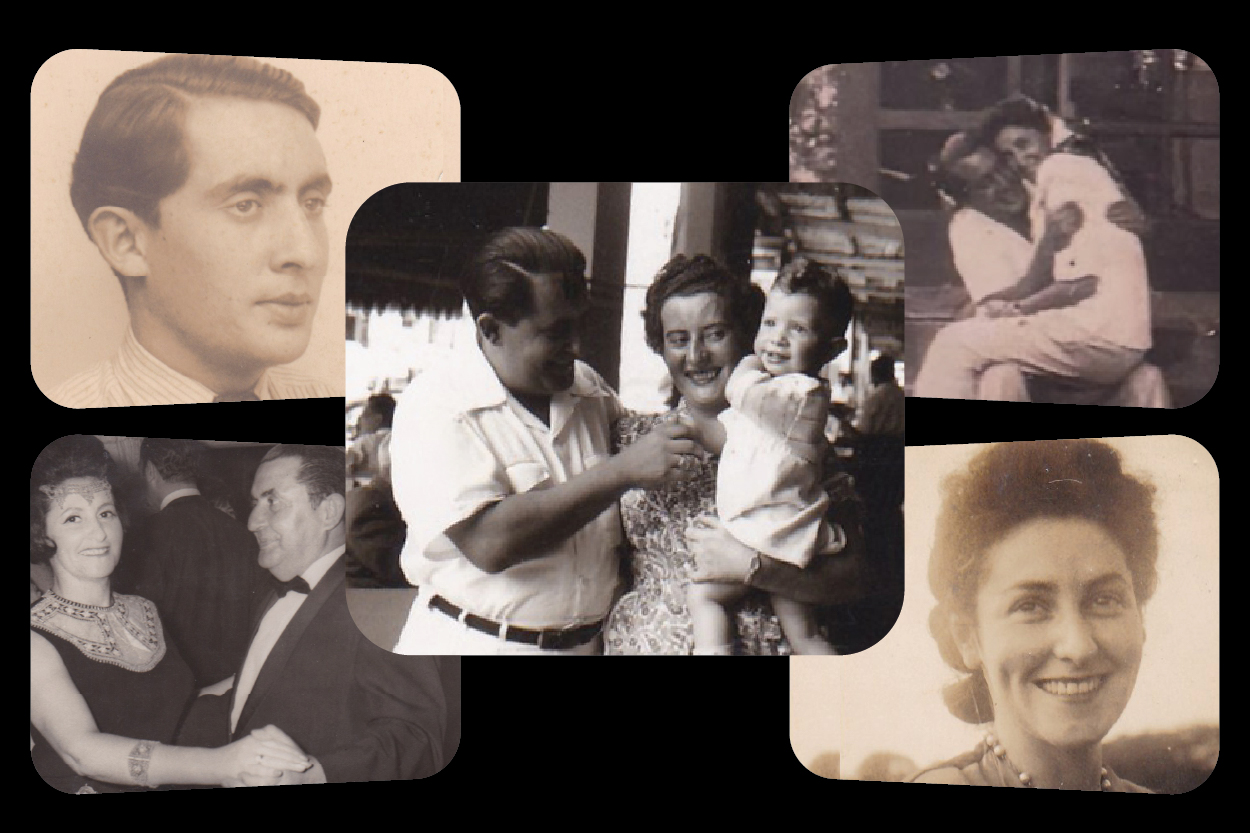
In mid-November, Alfredo told Ruth that he would be getting married in January, explaining that December was always an especially busy month because of the Christmas season and the many cakes orders he would have to fulfill. Ruth was delighted for her friend, who was about to be married. What she did not realize, however, was that Alfredo was referring to a marriage with her. And so, Alfredo proposed. He worked tirelessly throughout December 1946, and on January 10, 1947, he married Ruth.
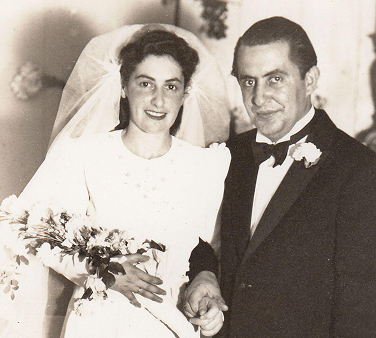
Ruth and Alfredo Czarninski, 1947
This brief note, written by Ruth on November 2, 1946, is a testament to her love and commitment to Don Alfredo.
Translation from German:
To my beloved Alfredo, as a small memento of the day we promised each other eternal love.
Your Ruth
Malecón, November 2, 1946
11:45 p.m.
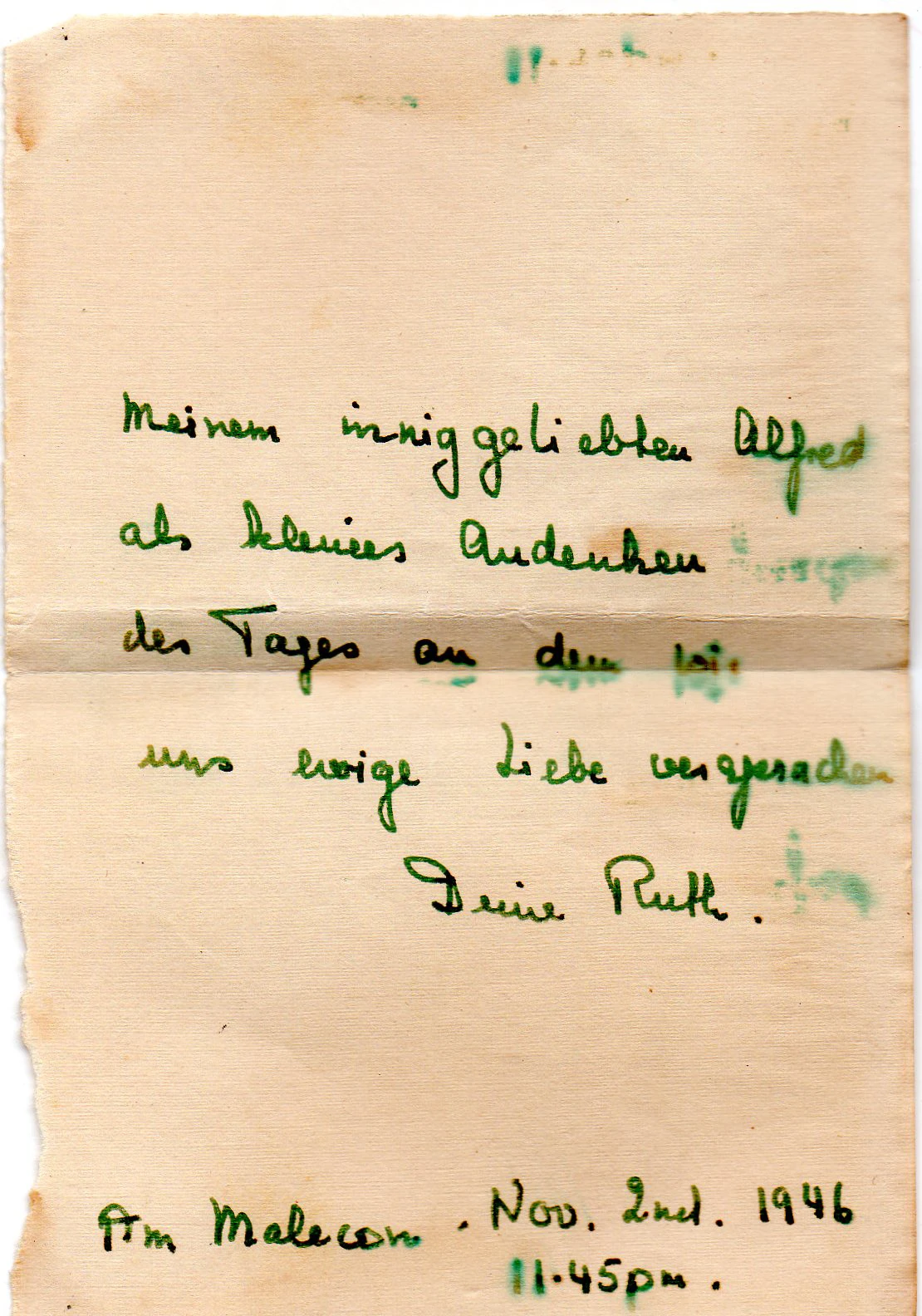
Love note from Ruth Baier to Alfredo Czarninski
In January 1949, Don Alfredo decided that the family needed to escape the heat and humidity of Guayaquil and took them to Playas, to the Meyer Boarding House, known today as Pensión Catán. It had dark rooms through which young Ruth had to pass in order to reach the kitchen and warm her son Johnny’s milk bottles. The service at the Meyer Boarding House was far from satisfactory, and Mr. Meyer was a grumpy “gringo.” As a result, Don Alfredo decided that the family should have a house in Playas. He purchased a lot on elevated ground in Ciudadela Victoria, a development promoted by the Estrada family and Banco La Previsora.
Since Mrs. Ruth did not want to live right by the sea, fearing that the tide might flood everything, Ciudadela Victoria proved to be an ideal location. It was situated behind the Hotel Humboldt, next to the Estrada family’s airstrip, near the casino, and close to Don Víctor Emilio Estrada’s “Shangrila” estate. Don Alfredo commissioned architect Héctor Martínez Torres to design the house. It was a small Spanish-style home with three bedrooms and a single bathroom for the entire family. A tower housed the staircase leading to the terrace above the porch.
The entrance to the property featured an arch bearing the name “Villa Ruth.” The kitchen operated on kerosene, and because electricity was available only during certain hours, there was no refrigerator. Items that required cooling were stored in a wooden icebox. Those who owned homes in Ciudadela Victoria spent the three-month vacation season there, escaping the most humid and hottest months of Guayaquil’s winter. Behind Villa Ruth were the homes of the Estrada family. Across the street stood the Czarninski property. On the same block were the homes of the Nebot family, followed by the Robinsons, while across from them lived the Maino family. The most beautiful house overlooking the sea belonged to the Tabachi family.
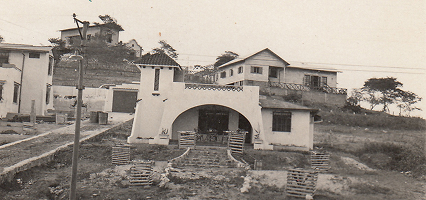
Villa Ruth
Near the Hotel Humboldt was the Carrión residence, and next to the home of Dr. Estéves stood the Stagg family house. In the same area were the home of “Manco” Bruno and, farther along, the Norero family’s “Villa Pupa.” Up the road from the Hotel Humboldt stood the Coifman residence, followed farther on by the Auerbach family home. To the left lived the Bondy family, and toward the town were the homes of the Stacy, Geiger, Nuremberg, Macías, and Dahik families, forming a close-knit community in which the adults spent time together and, especially, the children.